| | |  | | | A New Member Joins The Au | | |
|
|
|
|---|
|
In this newsletter | Arcane Sword Press | Get Haunted Industries | Ham & Egg Publishing Mythmere Games | Solarian Games | Stillfleet Studio |
|
|
|
|---|
|
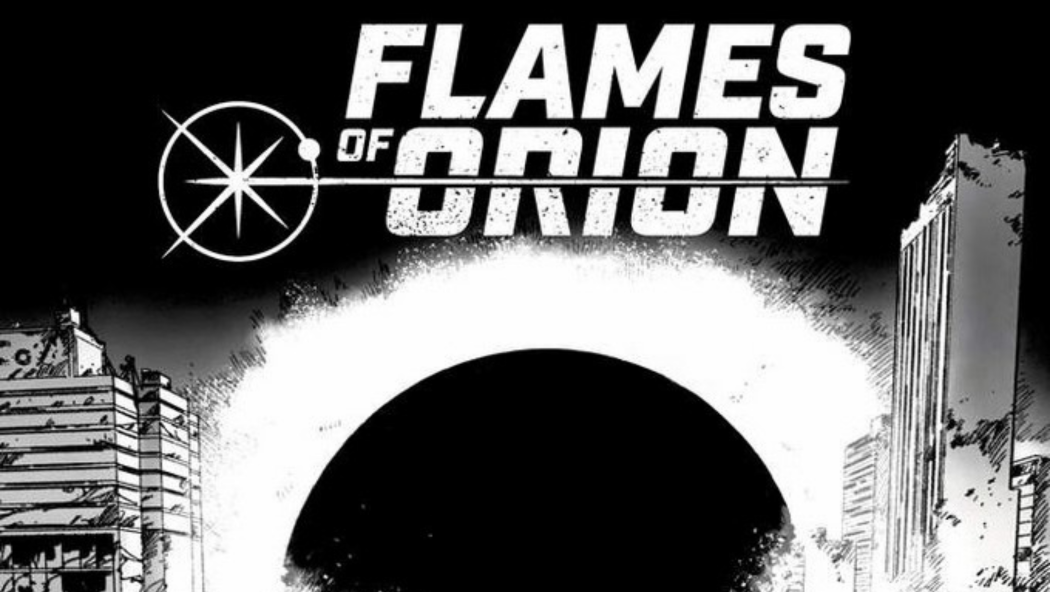
Joey Royale, Get Haunted Industries Reach for the stars with Flames of Orion | 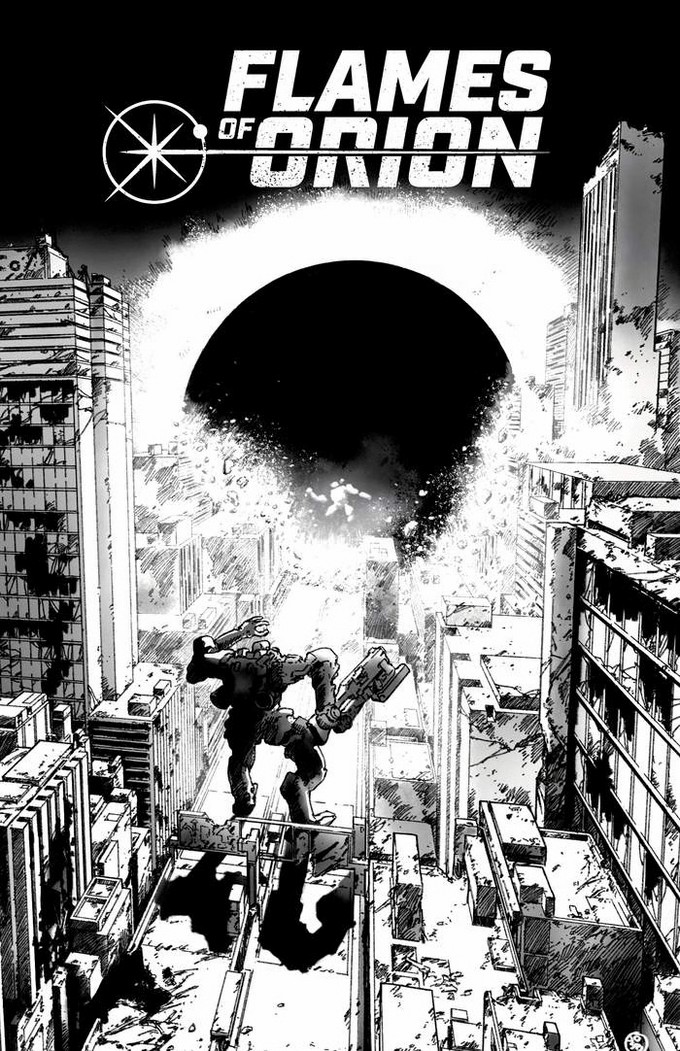 | I was never a skirmish game guy. First, I didn’t have much exposure to the scene. Second, I was intimidated by the incredible level of detail hobbyists poured into their miniatures—not to mention what I assumed was a price tag far beyond my budget.
Then I attended Under the Dice Fest and met the Hive Scum crew. Everything changed.
Now my basement workbench is stacked with Speedpaints and Rust-Oleum cans. I’m chopping up bits and kitbashing monstrosities like it’s my full-time job. Writing this article was nearly impossible because most of my fingers are currently fused together with super glue. The hobby is downright addictive, opening the door to an entirely new world of creativity and visual storytelling.
But enough about me.
This is about Flames of Orion, a game created by Stephen Hupfer—a genuinely great guy and a constant source of inspiration. Steve, along with Gage and Terry, make up the excellent Hive Scum podcast while putting out the Under the Dice zine and the annual Under the Dice convention (https://underthedice.com/utdfest/).
Flames of Orion grabbed me immediately because I felt comfortable with the rules after about ten minutes of reading. I’ve explored a few other skirmish games, but the crunch can get overwhelming. Before long, I’m staring at a wall of special rules and considering a nap. Flames of Orion is refreshingly approachable. It’s practically pick-up-and-play, which is perfect for a knucklehead like me.
In Flames of Orion, players command a squad of four mechs battling up to three opposing squads on a compact 2′ x 2′ battlefield filled with terrain. The rulebook strikes a wonderful balance between lore, rules, optional systems, missions, and artwork.
And speaking of the artwork—Holy Cow! Every illustration oozes with personality and action. I really appreciate each piece of art containing a caption with the artist’s name. Very classy touch.
The center of the book features full-color spreads showcasing beautifully painted, kitbashed mechs that practically beg you to start building your own. There are also photos of real-life space hunks enjoying the game, which is obviously an essential component of any great tabletop experience.
As the man himself, Steve says, “EXPLOSIVE & DESTRUCTIVE fun!!”
Learn to play and pick up the good stuff through these links:
Everything: https://underthedice.com/
PDF: https://www.drivethrurpg.com/en/product/518798/flames-of-orion
Getting Deep with Our Homeboys at the Weekly Scroll: |  | | | Mythmere Games
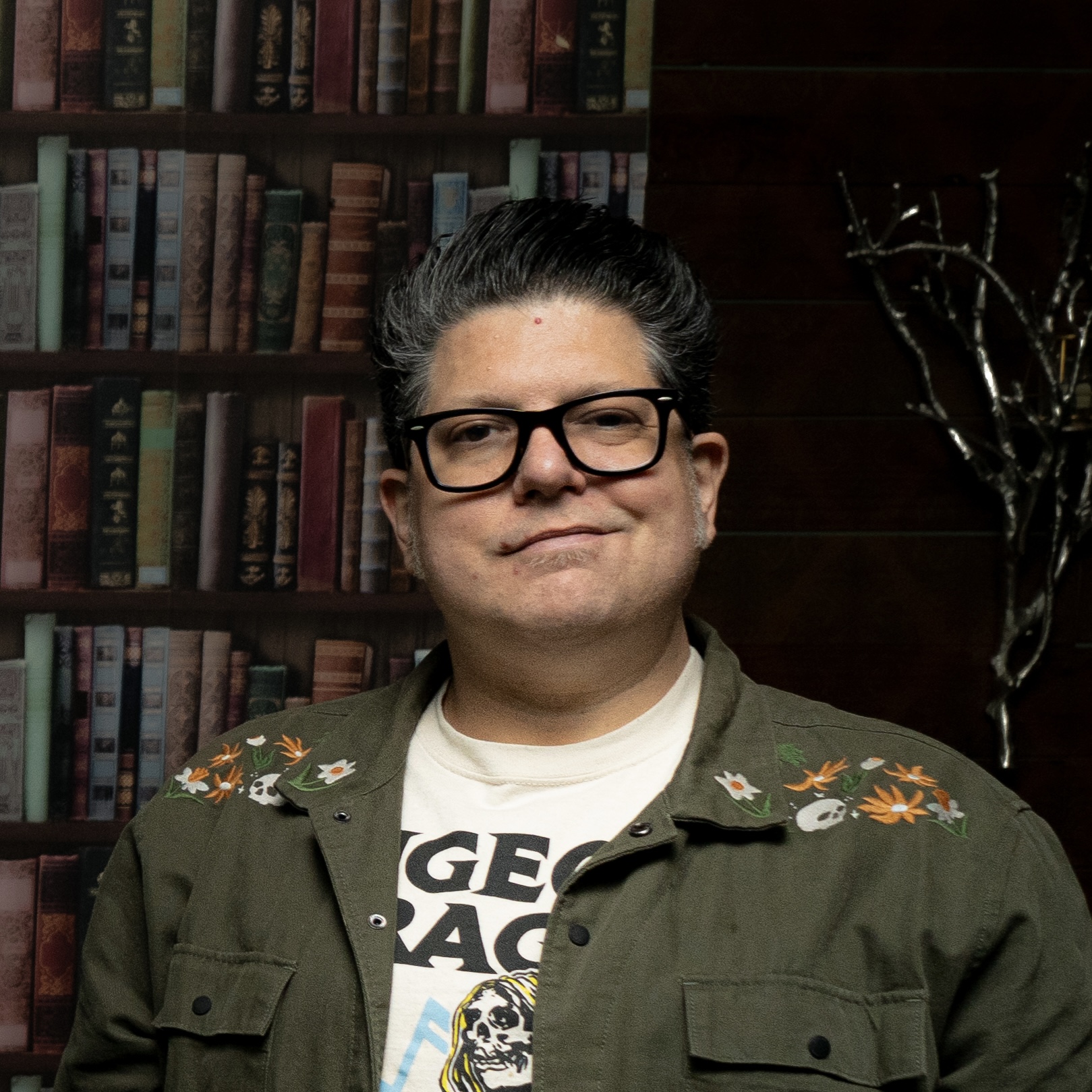
Welcome Mythmere Games to the AU! |  | The Analog Union is stoked to welcome Matt and Suzy from Mythmere Games to the team. |
|
|
|---|
|
Matt Finch is the ENNIE-award-winning author of Swords & Wizardry (a retro-clone of Original D&D), and co-author of OSRIC, the retro-clone of first edition AD&D. He is also the author of the system-neutral resources Tome of Adventure Design, Tome of World Building, and the Nomicon, together with a number of adventure modules and other resources, including the Quick Primer for Old School Gaming. Matt is a co-owner of Mythmere Games. |
|
| |
|---|
|
| | John “Hambone” McGuire, Ham & Egg Publishing Hambone’s Fast Five with Neil Sabatino |  |
Ahoy!
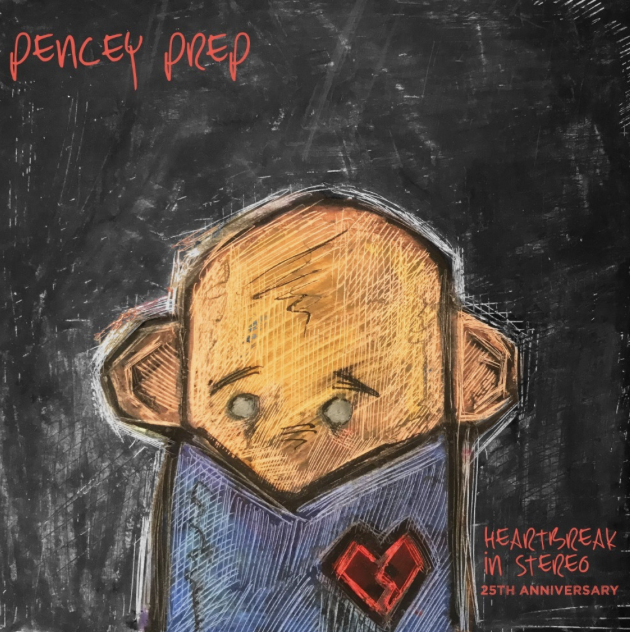
Hambone here, reporting for duty, back with another creator spotlight. This week, I am stoked to introduce you to an old friend and road dog of mine, Neil Sabatino. Neil is a visual artist, a founding member and songwriter of the New Jersey-based Emo band Pencey Prep, and, since 2001, the creative mind behind his own group, Fairmont. Neil’s own body of work as both an artist and a musician is prolific, and yet he still finds time to run Mint 400 Records, a label that has released over 730 records since its inception in the early 2000s.
He is currently overseeing the release of the 25th Anniversary re-release of Pencey Prep’s Heartbreak In Stereo. Without further ado, here’s Neil Sabatino. |
|
|
|---|
|
1) Neil, introduce yourself to our readers and let them know what you do in the music industry.
Currently, I’m running Mint 400 Records, the label I started in 2007 to be the home for Fairmont’s albums. I would say, specifically, I’m handling art and music production on some projects, distribution, light PR, light tour and show bookings, show promotions, release and radio schedules, along with curating the label and compilations. It’s sort of all-encompassing and does what some much bigger labels do for their artists, but more in line with the DIY punk ethos. Mostly just kind of working in a trial-by-fire capacity to do whatever needs doing for our current roster. |
|
| |
|---|
|
2) This year marks the 25th anniversary of Heartbreak In Stereo, which Mint 400 and B Calm Press are releasing on June 26th. What was it like for you revisiting an album you recorded in your 20s as an adult with a prolific body of work in the rearview and more on the horizon?
This record was really interesting to work on, especially because we added some live tracks that were recorded as we had just started working on the record, so you could hear the progression of a band kind of going through the process of fine-tuning songs. I think the entire band was becoming much better musicians from August 2000 through June 2001, when we finally recorded the album. The funny thing about Pencey Prep, for me at least, is I don’t feel embarrassed about the album when I listen back; it was the start for me of becoming a much better musician, and that came from just practicing non-stop, like 4-7 hour practices multiple times a week. I wouldn’t have arranged the songs this way or wrote the same kind of parts if this record was made later in my career, I think the special thing was we were all in a room all trying to make our mark at the same time and what could have easily ended up too many cooks in the kitchen just kind of came together to make this almost magical one time thing for all of us. I haven’t listened to the album as thoroughly as I did recently to do this touch-up and remaster. I was just so proud of our younger selves for putting this cohesive, great tribute to the close of our adolescent years into song. I definitely was a difficult person in those days. I think at that time we were all having major life issues, trying to figure out who we were and what we wanted to do, so it’s kind of a minor miracle that the record got done and we got to play a handful of shows as the 5 of us. I always think of the Pencey Prep work ethic when I’m working with new people, and how when it’s the right fit and the right people, stuff isn’t a struggle, the songs just come, and they sound right. Luckily, I feel like I have a little of that magic happening in my current project, at least at band practice and on the records.
3) You were a founding member of Pencey Prep who co-wrote and performed on Heartbreak In Stereo. What do you think continues to endear this album to fans a quarter-century later?
All I know is I was really sad at the time, graduated from college, couldn’t get a real job, had no girlfriend, fighting with my parents. Everyone in the band had similar stories and this overwhelming feeling of aimlessness. I had left my previous successful band to try to start my own thing, and it failed. Then I get a call from Frank about joining. Really, I had what felt like nothing else going for me. I put 100% of everything into Pencey Prep, and I know the other guys did too. When you have five guys believing in something so much and pouring their hearts and souls into it, how can it not be great? It endures because it’s three distinct viewpoints of heartbreak, a mishmash of lyrics all about one universal thing: being miserable because you don’t have what you want. Without going into specifics of our personal lives, we had some heavy weights on our shoulders, and it felt like we were each other’s only support group. Mix that with the eclectic, diverse group of music we listened to nonstop, and it was bound to be good. We took the best parts of, like, 10 genres, forced them into 10 songs, and made them work together. We wrote a nod to the Cure like “Yesterday” and “19” and then an all-out metal song in “Trying To Escape The Inevitable” and did them as well as we did “Lloyd Dobbler”, an alt country ballad. This was the first truly collaborative band, I think we had all been in, and the exchange of ideas was constant. It’s so New Jersey, as they always say, must be something in the water here.
4) Looking towards the future, what upcoming Mint 400 releases are you most excited about?
I love this label because it’s less like a label and more like an artist collective and whether it’s bands that have been on my label for a decade or more like Young Legs, The Make Three, Yawn Mower or brand new signings like Afloat, Gardenia, Johnny Nameless, Novablood, everyone is doing their own cool thing that lies under that vague umbrella term of “indie”. Can’t pick just one band; it’s like asking me to pick between my children. I love them all equally. I’m just excited that we’re able to release so much cool stuff to the masses. I’m excited for you, dear reader, to discover an overlooked label that has so many gems you’d think we’re a jewelry store.
5) Thanks for the chat, Neil. Where can people find your stuff online?
Mint 400 Records is online at http://www.mint400records.com, and we’re on Instagram, TikTok, Facebook, Bluesky, YouTube, and more, usually with the same handle of mint400records. I’m still occasionally dropping Fairmont albums made with my longtime collaborator Christian Kisala, but our new project, Please Be Careful (https://www.instagram.com/pleasebecarefulband), has an album out now, and we’re playing shows in the tri-state area. If that isn’t enough, also doing the art thing http://www.instagram.com/nsabatinoart and working hard on album covers and a bunch of books with my Pencey Prep bandmate Shaun Simon. Our first book, Open Caskets, is available for pre-order in digital format on Amazon as we speak! (https://tinyurl.com/5dzd28rt) | | |
|
|
|---|
|
Arcane Sword Press Magazine Madness Finale and New Beginnings! |  | Between December 2025 and the beginning of June 2026, I covered a total of 18 (I think?) Tabletop Gaming publications. And there were some true gems of the hobby worth seeking out, while others are aggressively OK. So, for this final installment, I will be ranking my publications from least to most favorite. I will not include the indie zines in this rating because I think they are, honestly, in a league of their own, and some of them, quite frankly, blow these old publications out of the water. Oh, and I won’t be doing this alone! That’s right, I will also be including Steve Jackson via The Space Gamer issue 29 from 1980, who also published a similar article called “Science Fiction and Fantasy Game Survey”! So when possible, I will give my ranking and include some of Steve Jackson’s contemporary opinion, indicated with SJ! Let’s get started:
14) Judges Guild Journal, The Dungeoneer, etc: Nothing special, I’m sure there is something cool hidden in some issues, but it isn’t worth digging. SJ: “Both are rather sloppily done; the Judges Guild bills them as “good fanzines*” If they are fanzines, they’re better than average. If they are considered professional, they’re at the bottom of the heap, especially when the price is taken into account.”
13) Dungeon (TSR): #1-12 – Sorry folks, I don’t really like this magazine! I’m sure later issues are cool, but this magazine is mostly uninteresting and overly written adventures. But I like the idea of this magazine
12) The Duelist (Wizards of the Coast): This was a very cool dive into the past and into the fantasy vibes of my childhood in the mid-90s. This stuff here is for old School and Vintage format players, and is a cool bit of history, but nothing else really stands out
11) Imagine (TSR UK): It’s kinda cool? But also nothing special. They couldn’t compare to their UK counterparts, who blew them out of the water, content-wise. And this may have been TSR management’s fault?
10) Challenge Magazine (GDW): Its cool if you like other RPGs by Game Designer’s Workshop, but i lost interest once they stopped doing the JTAS segments. There is cool stuff in here if you like Twilight: 2000 and 2300AD, or even later- Shadowrun and Call of Cthulhu!
9) Ares (SPI): Conceptually cool, and definitely tried to be unique by offering pack-in complete chit-and-hex games. But those games seem to be mid-tier to bad. Great quality layout though! SJ “This is a very attractive magazine, but it has some real problems. The kindest assumption would be that, after only two issues, “shaking down” to go through. It’s an interesting magazine, but it’s not yet the magazine SPI has been advertising.” and “The moral here may be: It is easy to say you’ll put out a magazine that appeals equally to gamers and fantasy/SF readers. It’s harder to do it.”
8) The General (Avalon Hill): A landmark magazine for those into wargaming, very cool interiors, and endless game options if you play Avalon Hill’s offerings. SJ – “It offers detailed analyses of actual games, variants and scenarios, historical discussions, and contests-but only on the AH games. And so much of the AH line is historical that the SF/fantasy material (for Starship Troopers, Dune, Magic Realm, Wizard’s Quest) can get buried.”
7) Adventure Gaming (Manzakk Publishing): A well-curated mix of content of above-average material that would both appeal to fans of The Dragon and The General. It’s a shame it had a short run!
6) Sorcerer’s Apprentice (Flying Buffalo): This magazine is cool and extremely useful if you played Tunnel’s & trolls! In fact, this magazine made me go out and buy an old box set copy. For a house organ magazine, it succeeded! Well done!
5) The Dragon (TSR): A landmark, great publication overall that is always a delight to flip through. I always pick up used copies when I see them at conventions, just to enjoy the advertisements and occasional articles while I run my vendor booth. There are some very fun articles in these old issues. However, no issue is rock-solid, and the articles often feel like empty padding. Regardless, I still recommend it as a fun, casual read for old-school RPG fans. SJ “ THE DRAGON is a paradox. The largest magazine of its type (both in page count and in circulation), it often seems to have a rather low average quality of material. There are two reasons for this. The first: TD really does run more than its share of amateur and/or terribly boring stuff. The second reason? The average DRAGON is nearly twice the size of most other SF/fantasy game magazines,..and is one of the few to come out monthly. If not every article is a hand-polished jewel, one can understand! The net amount of high-quality material in TD is nothing to be ashamed of.”
4) The Space Gamer (Metagaming Concepts / Steve Jackson Games): This one surprised me! It’s full of charm and is a very good tabletop magazine that feels like it was written with enthusiasm for the hobby! Truly, I enjoyed every issue I slipped through, and even went back to some of them! SJ “A caveat, for those who hadn’t noticed: this article was written by the publisher of TSG, who is not entirely disinterested …TSG attempts to be the ‘news 1 * magazine of the field. Originally devoted mainly to science fiction gaming, it now covers SF and fantasy equally, and is expanding its coverage of computer gaming. TSG will run a short (400-word) ‘capsule review’ of any new game or gaming product it receives. There is also an annual survey of games and publishers.”
It’s very funny that he “reviewed” his own magazine within his own magazine!
3) The Journal For the Traveller’s Aid Society (GDW): This magazine hits it out of the park. Yes, it is extremely focused on JUST Traveller, but everything in each quarterly issue is cool, inspiring, and/or exciting. While I obviously have a bias, I also blame this magazine for getting me even more into Traveller. I wish more games had dedicated magazines that provided this level of consistent, high-quality content. SJ “ As such, its format and contents reflect a variety of Traveller role-playing activities- The Beastiary (animal encounters for Traveller), Ship’s Locker (artifacts and devices for Traveller ) and Refs Notes (currently concerned with Robots), In addition, the JOURNAL has coverage of new SF games and products (Just Detected) and variants of SF games (primarily GDW games), What we have here, then, is almost entirely a house organ … but it is a GOOD one. The JOURNAL is well-written and graphically excellent.”
2) Adventurer Magazine (Mersey Leisure Publishing): This is one of the best magazines I’ve ever looked at. Graphically compelling, the content is top-tier and covers both popular and less popular games. It’s very obviously a passion project; they burned too brightly, too fast. This is truly a “hidden gem” of the tabletop RPG world. Ya’ll need to check it out.
1) White Dwarf Magazine (Games Workshop) issues 1-100: The origins of White Dwarf are extremely cool and interesting, but wow, these dedicated hobbyists in the UK really knew how to rise above and beyond the rest. Of all of the magazines listed, this one is still going. While that’s primarily due to their success with Warhammer and related IPs, the foundational work of White Dwarf as an RPG magazine deserves more appreciation. The best D&D content I read was found here, not in Dragon. There’s something in the UK that the gaming hobby unlocked: visually and content-wise, Games Workshop dominates as the best gaming magazine I’ve read. No wonder Adventurer Magazine tried (and almost succeeded!) at emulating it. SJ “Great Britain has many more gamers per square mile than does the United States, and WHITE DWARF is probably the most important fantasy/SF game magazine in that country; it is certainly the only one with any important circulation in the U.S.The same general sort of material you find in any fantasy game magazine — usually well done, and with a distinctly British slant. Lots of material for D&D (and a great preoccupation with new monsters and nasty traps). A certain amount of T&T and Traveller. Short reviews and news items, almost all about U.S. companies. It seems that the United Kingdom is very long on gamers, but somewhat short on game companies!”
So what’s next for my Analog Union editorials? Well, it looks like I’ll be doing RPG Anthropology! I appreciate everyone who voted on what I should cover next. I’m very happy to mix up the articles and move away from dusty magazines! I’m actually pretty excited about this! I will be using it to talk about games I frankly haven’t really given a chance, or that I’m curious about and haven’t heard or read people talk about. RPG Anthropology will be bi-weekly, BUT I will fill in the odd week in between with Hobby artists whose work I enjoy and think should be better known! So look forward to that as well!
Next Week- RPG Anthropology Begins with “It Came from the Late, Late, Late Show” by Stellar Games!
Until next time! |
|
|
|---|
|
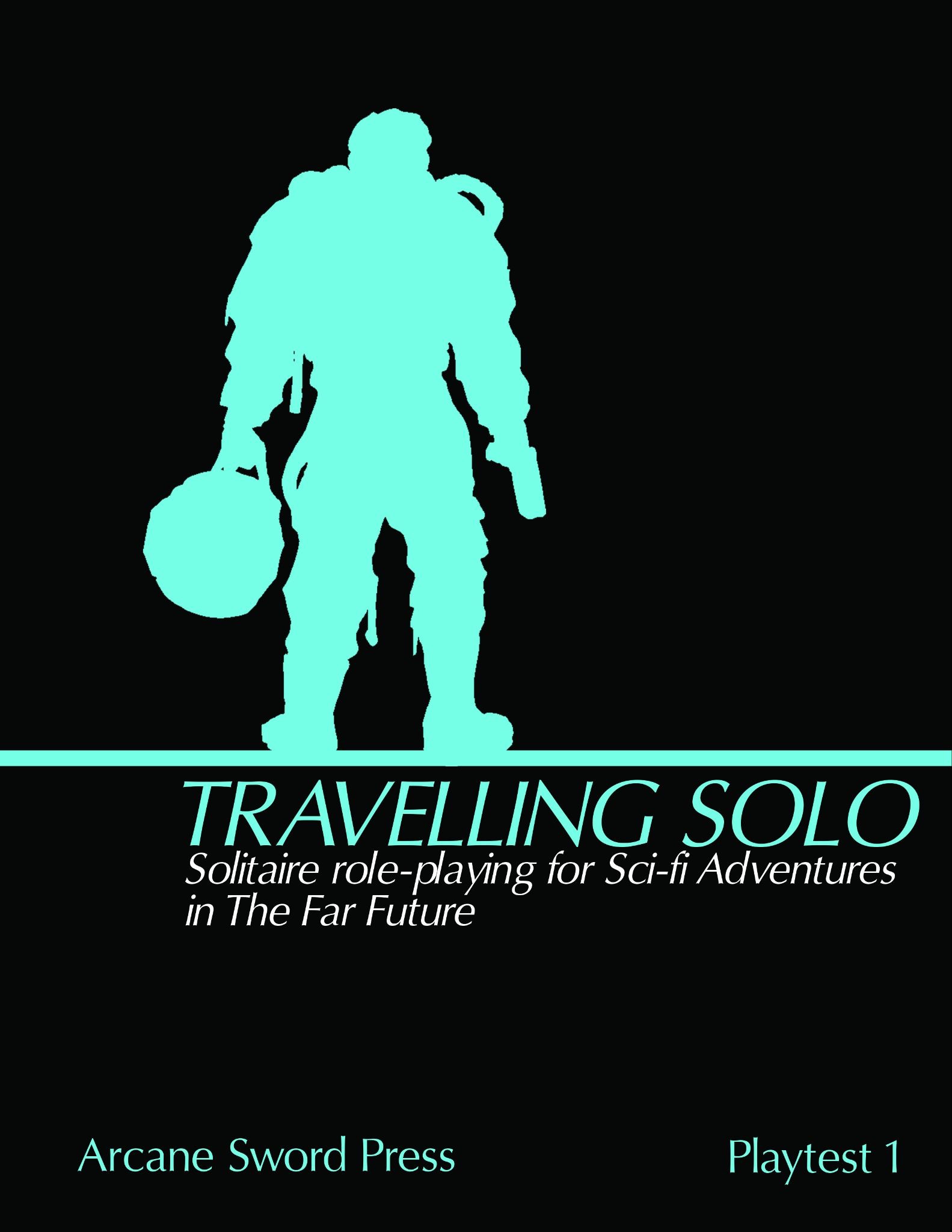
By the way, I am looking for Playtesters for my next Traveller’s Aid Society release, “Travelling Solo: Solo Role-Playing for Traveller” If you’d like to sign up for it, please fill out this form! Thanks! |
|
| |
|---|
|
Stillfleet StudioWhy We Roll × Munkao on Kala Mandala
| 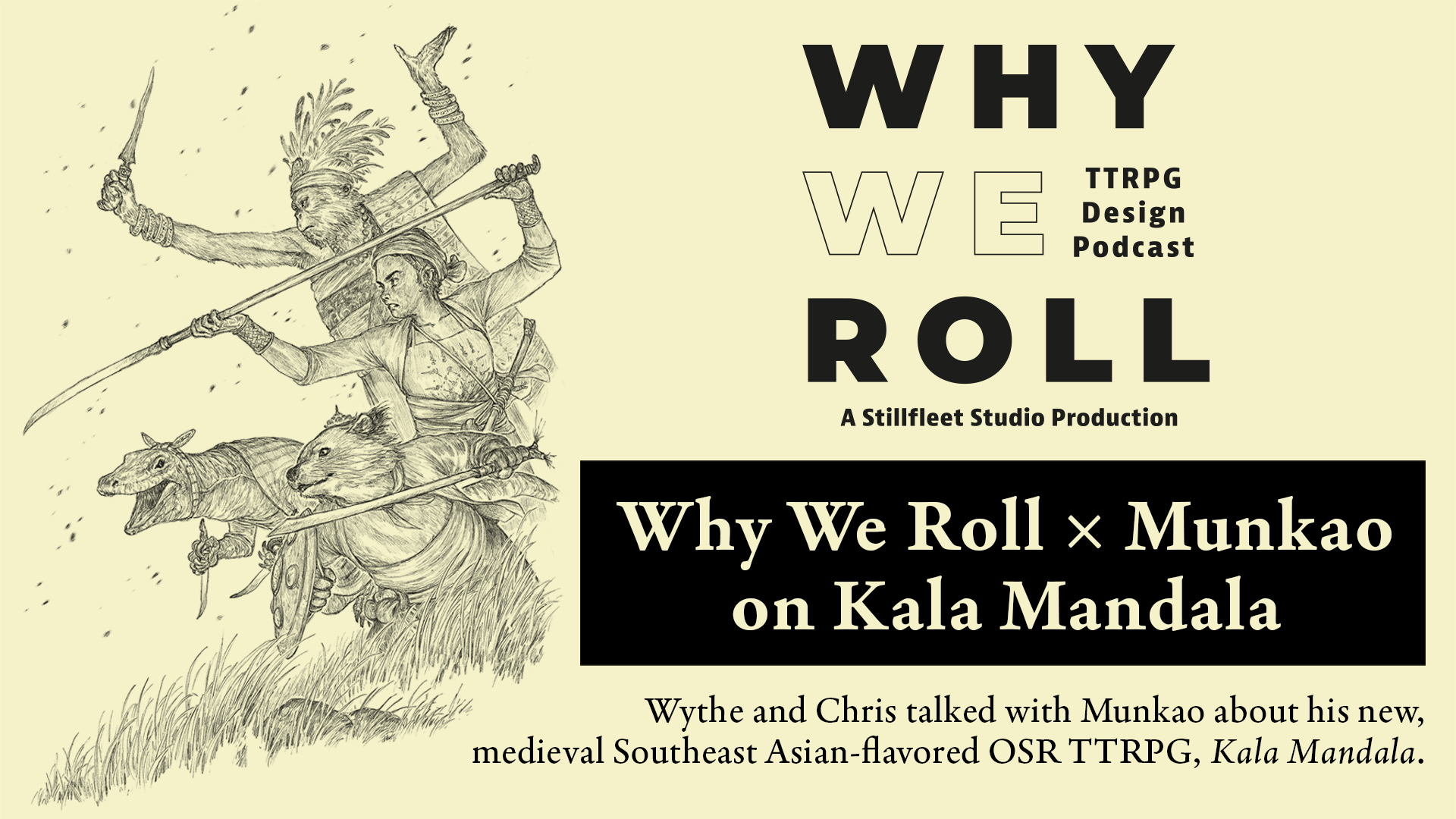 | Hey, y’all, this is Wythe from Stillfleet. I want to highlight a recent Why We Roll interview with OSR artist and game designer Munkao. In addition to introducing a new game that looks rad and smartly draws on a non-European vein of fantasy, Kala Mandala, Munkao offers some useful thoughts on philosophies of game design.
Among other things we talk about the difference between traditional TTRPG design—based on categorizing things, putting them in boxes or lists (of classes, of species, etc.)—and mandala-inspired design—based on overlapping identities, jumps between local centers of intrigue, and shifts in attention from rules to art to world bits in a more fluid, and frankly more realistic, stream-of-consciousness style.
At the level of the game-world, mandalas are concentric rings of tradition, language, and power, pushing back against clear us/them, good-guy/bad-guy narratives. I found it interesting that, at the level of game design, the whole project of Kala Mandala is also a series of mandalas—overlapping zines that build out sketches of a game-world without leaning on definitive “lore.”
This perspective on game design is extremely timely, especially for zine-lovers. I know many of us tend to dream big, but it may be smart not only from a production perspective but a pure game-design one to start with one “center” for a game (one adventure, one setting) and hop over to another, feeling our way toward the whole as we go, as opposed to proceeding from a long-ass definitive list of to-dos. Something to chew on.
Watch the interview and consider subscribing to Why We Roll if you like digging into contemporary TTRPG design!
Speaking of indie TTRPG design that brings together adventure-game stats and story-game elements, here’s a PSA: the first-ever Grit System Game Jam is running all summer. Don’t miss it! | | |
|
|
|---|
|
| | Solarian GamesConvention Recap: Mod Con I |
|
|
|---|
|
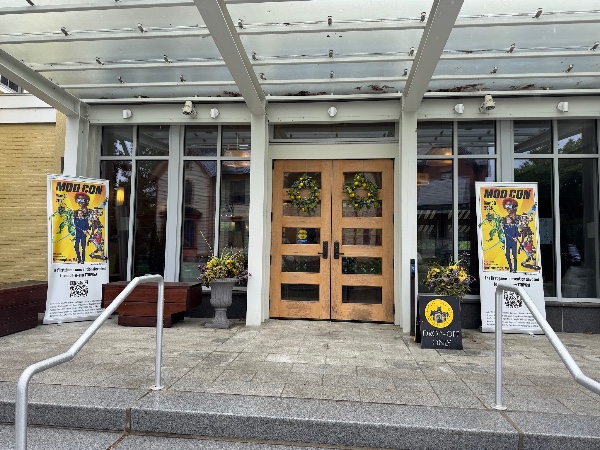 | Well, we did the thing! ModCon I happened on Saturday, May 30th, on the Smith College campus in beautiful Northampton, MA. This was the first time either Solarian partner, Jayson or Peter, had run a convention, even a small one-day like this, so we had one self-imposed directive: keep it simple, stupid.
For our first time out, we kept it to just one thing: playing games. Special guests, vendors, and other con frippery will all happen as Mod Con goes on, but this year was all about playing games and putting moderns in the spotlight. And it worked!
Attendance was respectable, if modest, for a first outing, with 74 people in total on the day. (68 badges pre-sold, 8 no-shows, 14 walk-ins.) The best part was how great the people were. I was happy to see a diverse crowd, all having a great time despite the weather.
Oh man, the weather. When we picked May 30th as the date over a year ago, everyone generally agreed that the one thing that should be good would be the weather. Ha! When we all showed up at 7 am to begin setup, it was overcast, breezy, and 39 degrees Fahrenheit. The morning got worse as the wind picked up and the rain began to fall, and our spirits dropped as the clouds darkened. To top it off, the heat in the conference center was off for the season.
Sorry to everyone who had their first morning games downstairs in The Situation Room and The Crucible! We moved some tables upstairs for the first few hours and put space heaters where we could. Eventually, the clouds parted, the sun warmed up the town, and we were able to get back to using the whole center. To the credit of all the gamers, they kept a stiff upper lip and kept on playing through it all. | 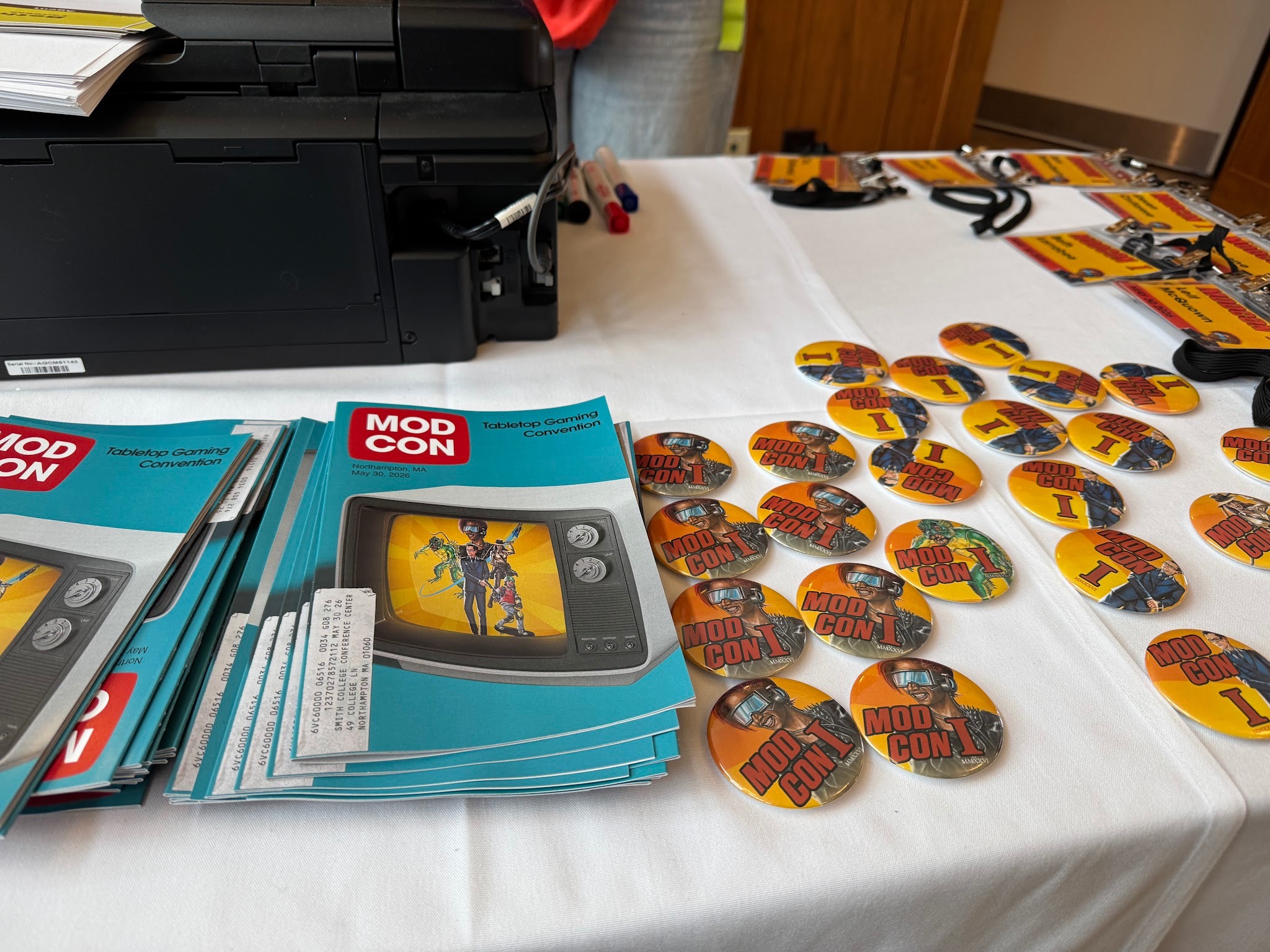 | ModCon is the “moderns” gaming convention, and the games we had were an excellent representation of all the different ways a game can be a Modern. Our definition, for convenience’s sake, is any game set in the 20th or 21st century. We saw everything from spies to pulp heroes to WWII miniatures to kids on bikes, weird horror, cyberpunk, and Saturday morning cartoons.
If you want to check out the full list of games, here’s a PDF of the ModCon I program guide. |
|
|
|---|
|
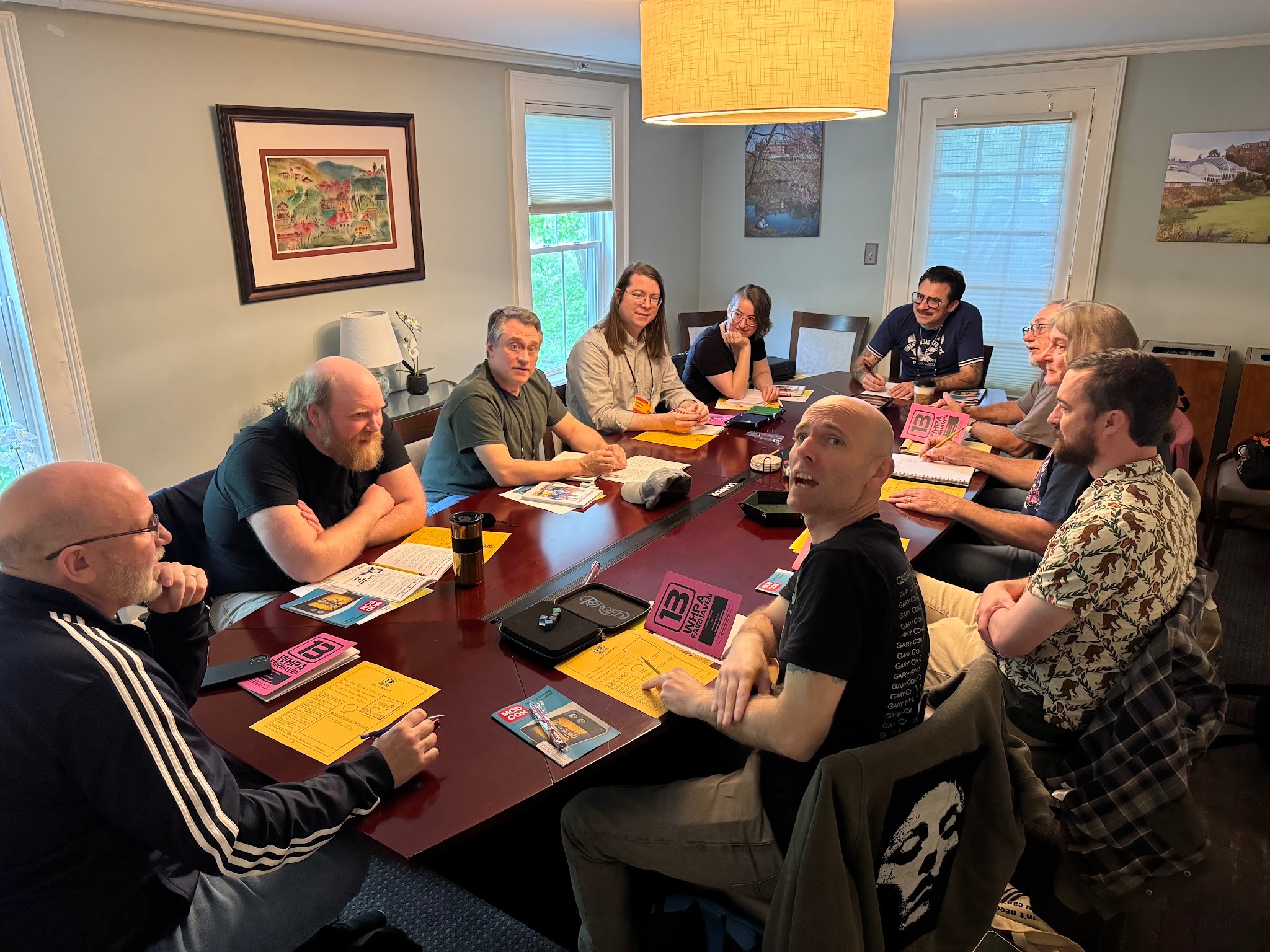
One of the great things about the venue for ModCon is a cool little boardroom that we call The Continental, where GMs can run large games and even control the lighting. Joey Royale kicked everything off with a nine(!) player game of Weird Heroes of Public Access. |
|
| |
|---|
|
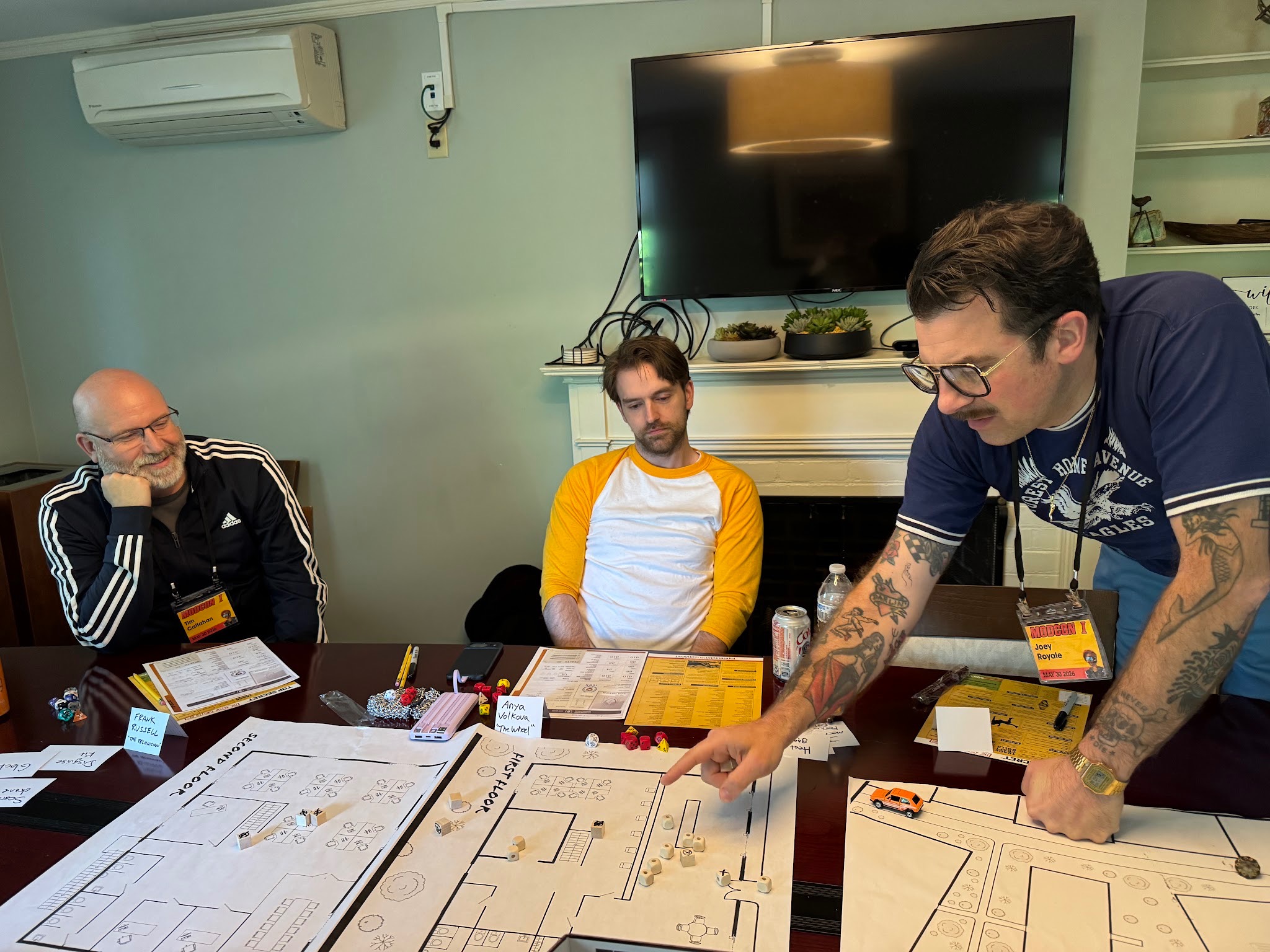
I took the second slot of the day to run “The Bank Job,” a Top Secret mission that can be found within the Forged With Fire module from Solarian. With a player group consisting entirely of professional educators, I assumed they’d be subtle, thoughtful, and cunning. They did a Leroy Jenkins straight into the bank and ended up setting off an action thriller with the highest body count I’ve ever seen in the times I’ve run this game. |
|
| |
|---|
|
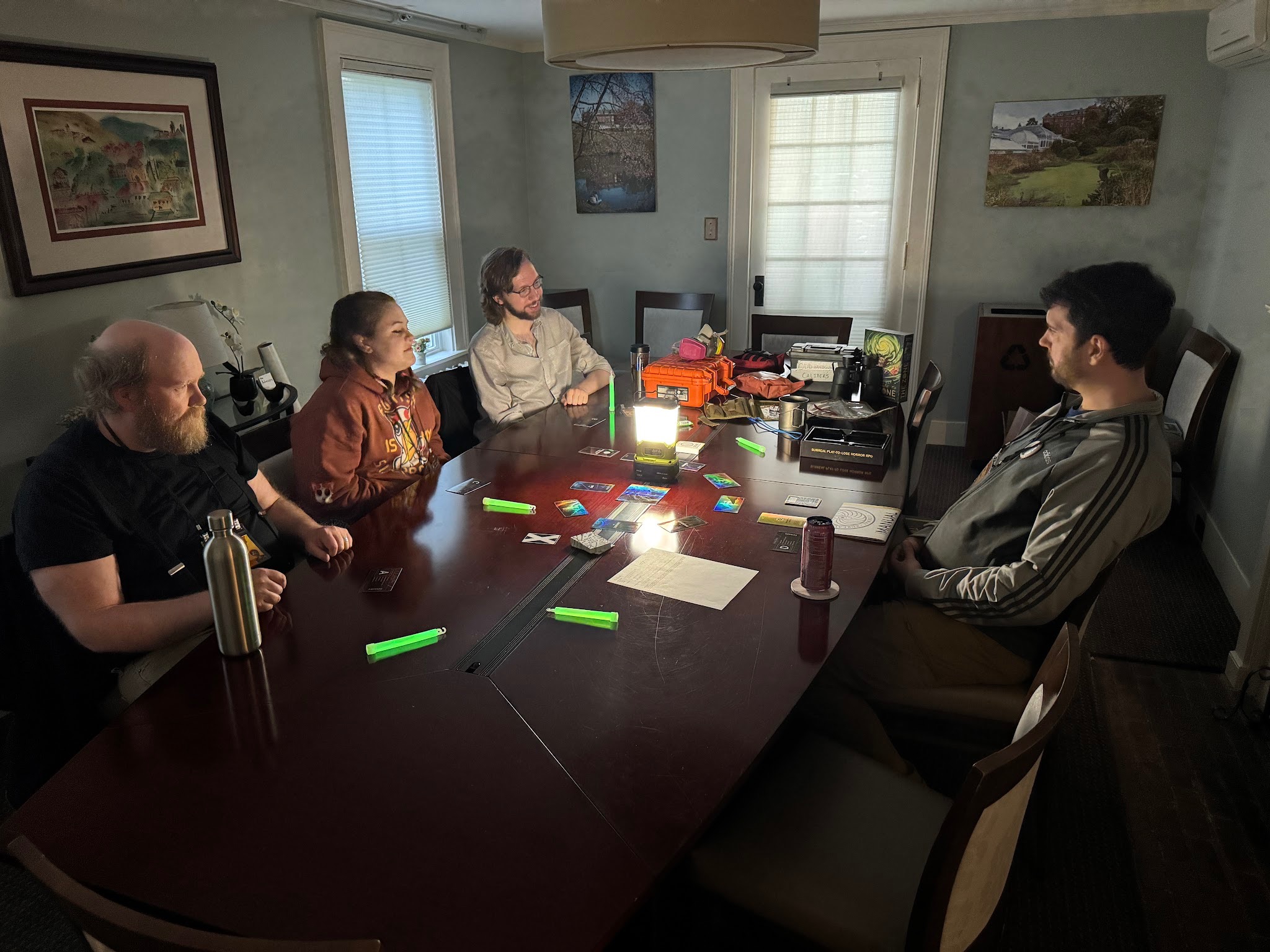
The last game of the day at The Continental was The Zone, a spooky tale about a doomed expedition, played in low light with glow sticks. |
|
| |
|---|
|
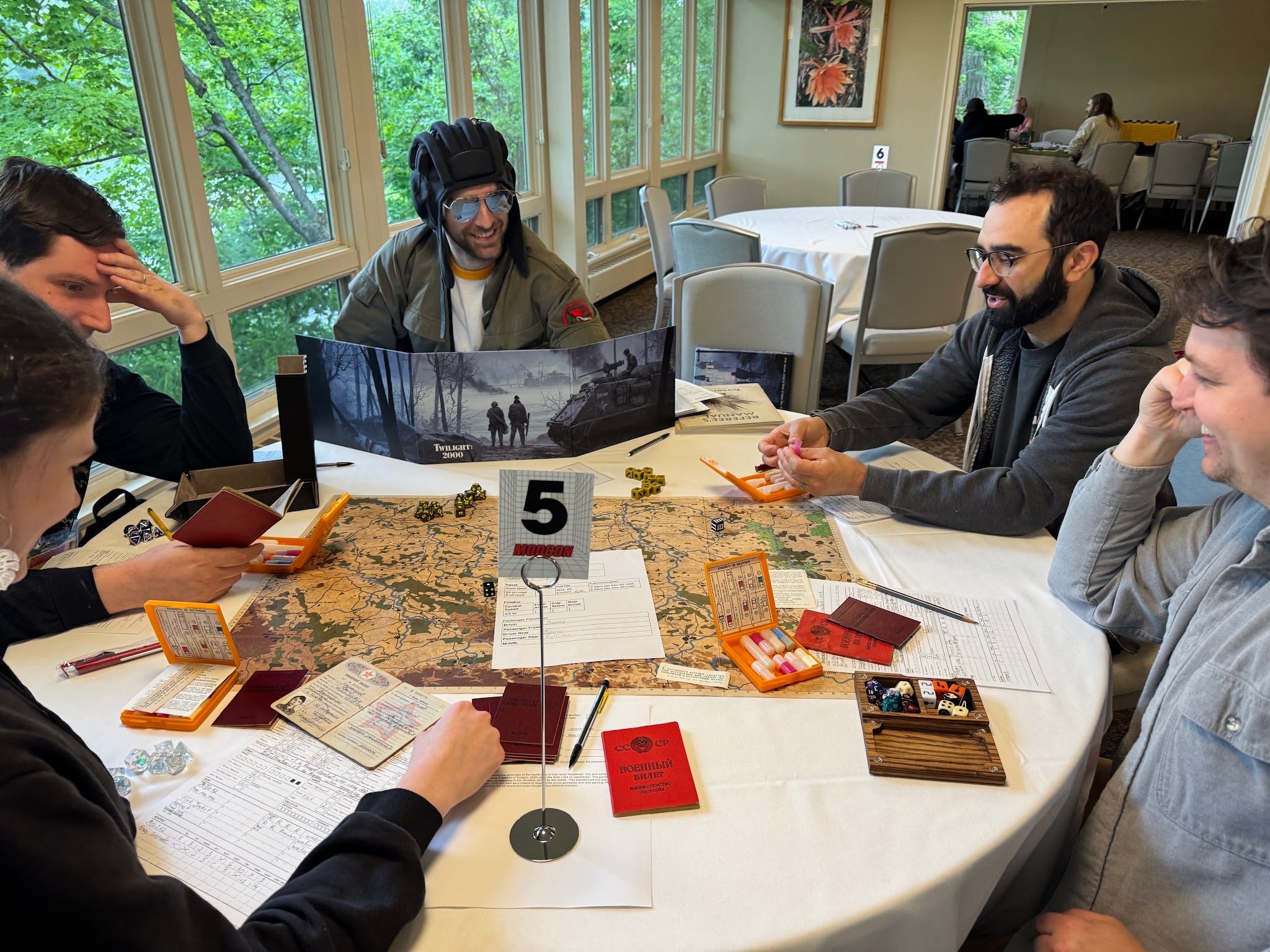
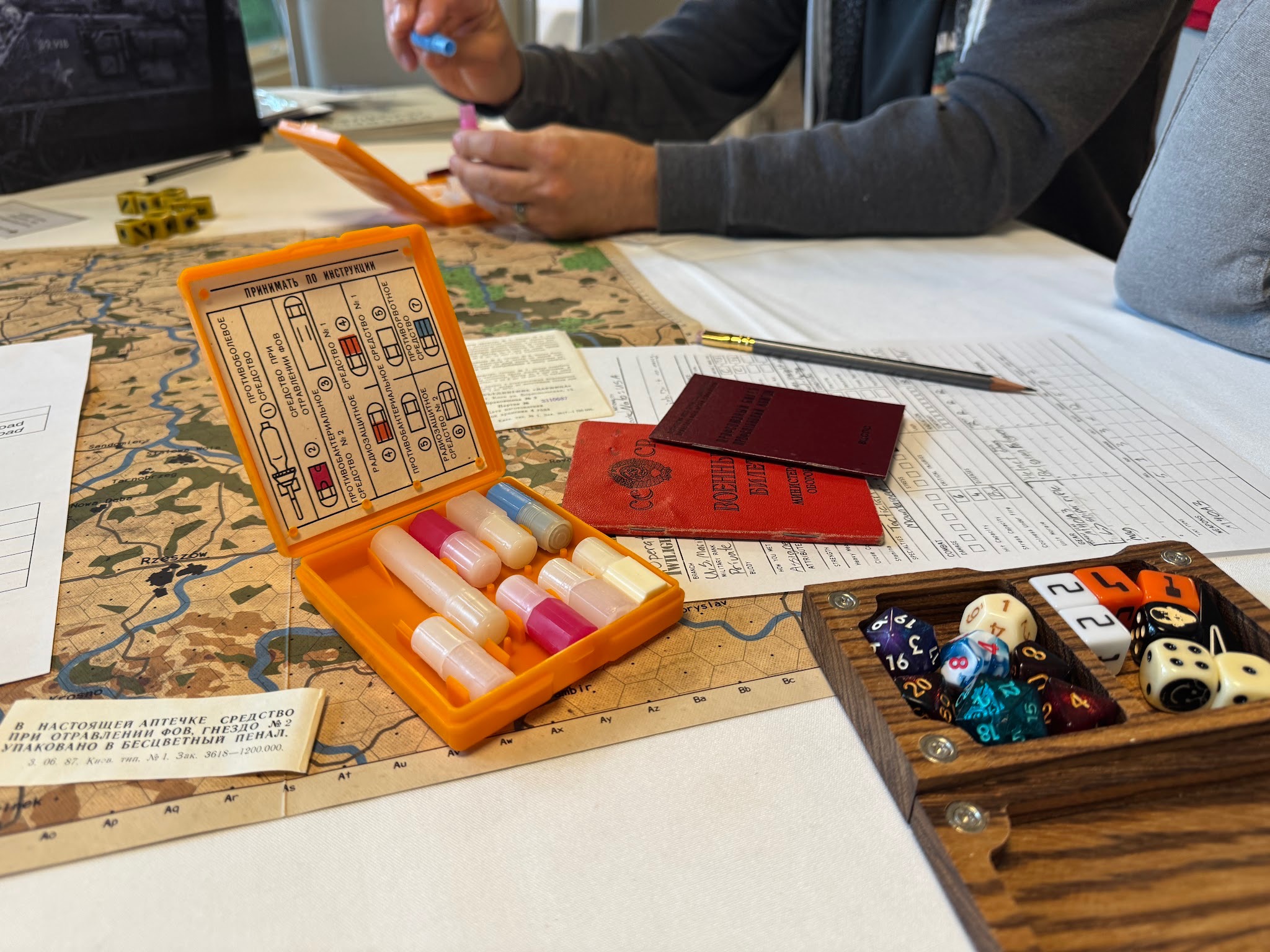
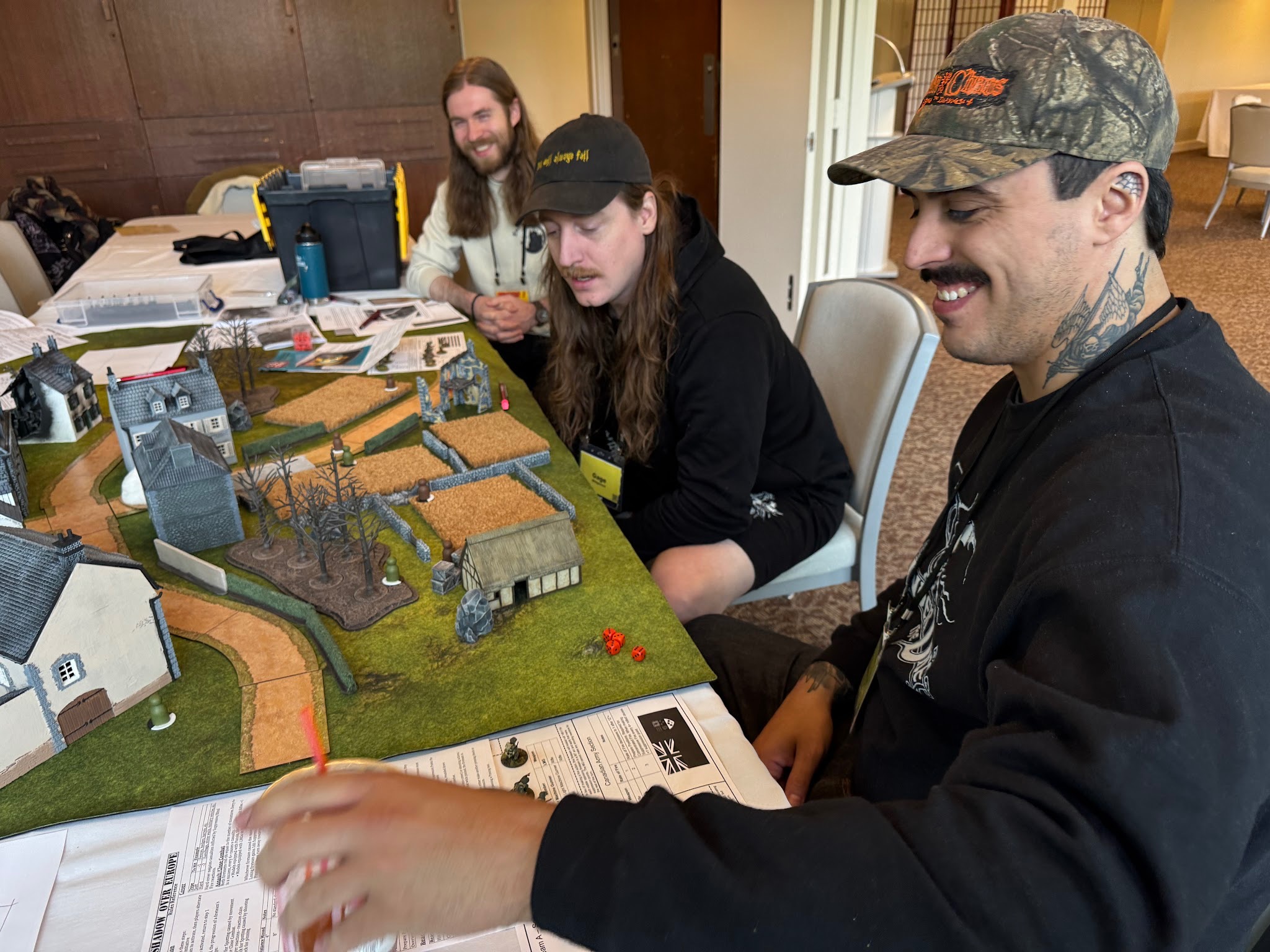
Great fun was had by everyone, and the GMs all came prepared with incredible adventures and some cool setups. Shout out to Bryan Larkin from Arcane Sword for assembling a complete complement of vintage Soviet gear for his Twilight 2000 game, and to Kevin Borrup and Ben Levesque, who did incredibly cool miniatures in The Safehouse. |
|
|
|---|
|
For the organizers, Jayson, Peter, and Steve, it was a loooong 18-hour day, but so worth it. Plans are already underway for ModCon II next year, and we’ll be adding vendors, special events, and featured guests. Thank you to everyone who came out for making such a killer day of modern gaming, can’t wait to see you at the next one!
-Jayson | 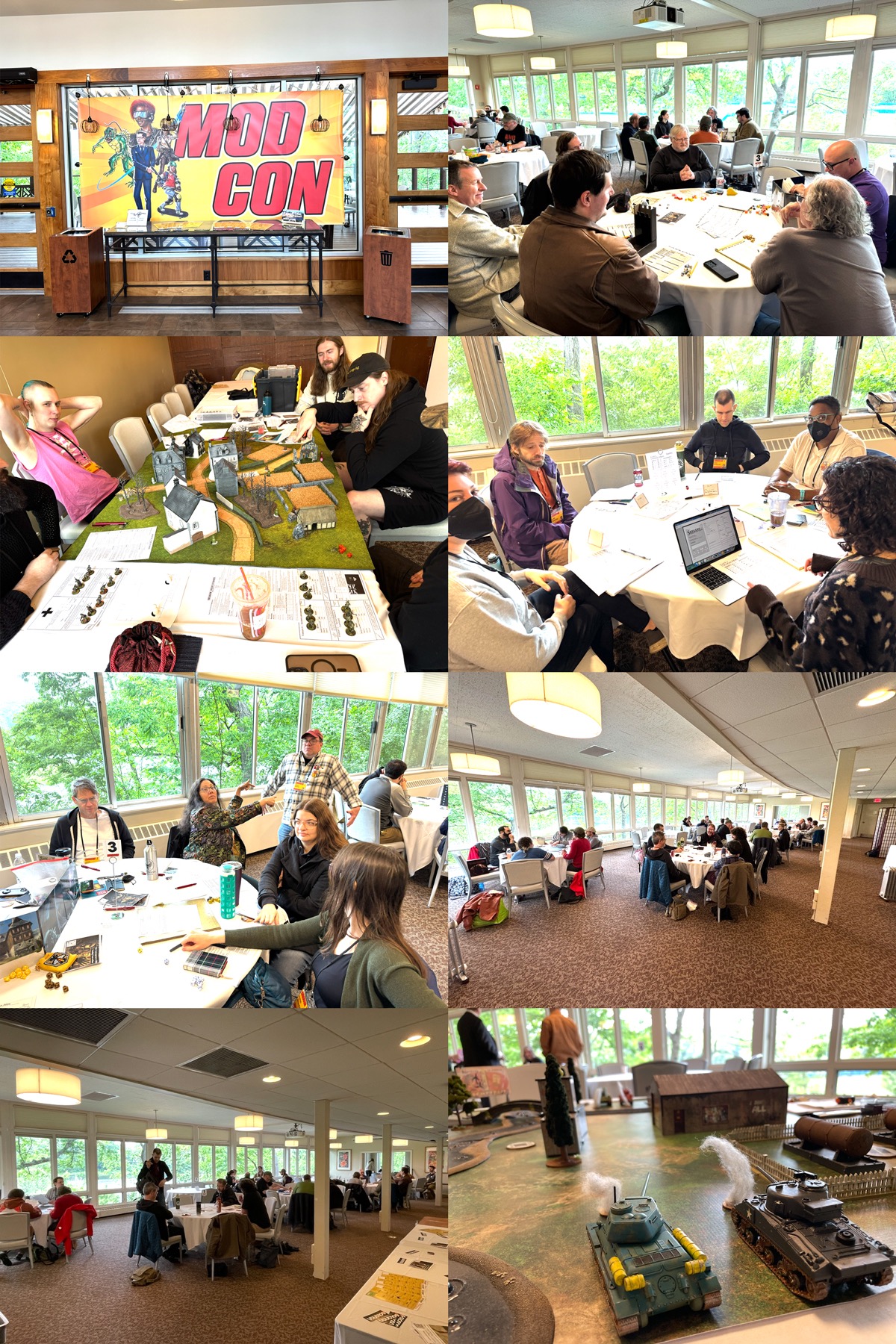 |
|
|
|---|
|
ShireCon North Canaan, CT – September 25th & 26th |
|
|
|---|
|
ShireCon is cleebrating it’s 8th year! Two days of role-playing and board games in the Berkshires! Come for a day and a half of OSR and modern gaming. Visit our vendors selling old and new games and enjoy the local fare in North Canaan, CT |
|
| |
|---|
|
ArcaneCon Northampton, MA – October 16th & 17th |
|
|
|---|
|
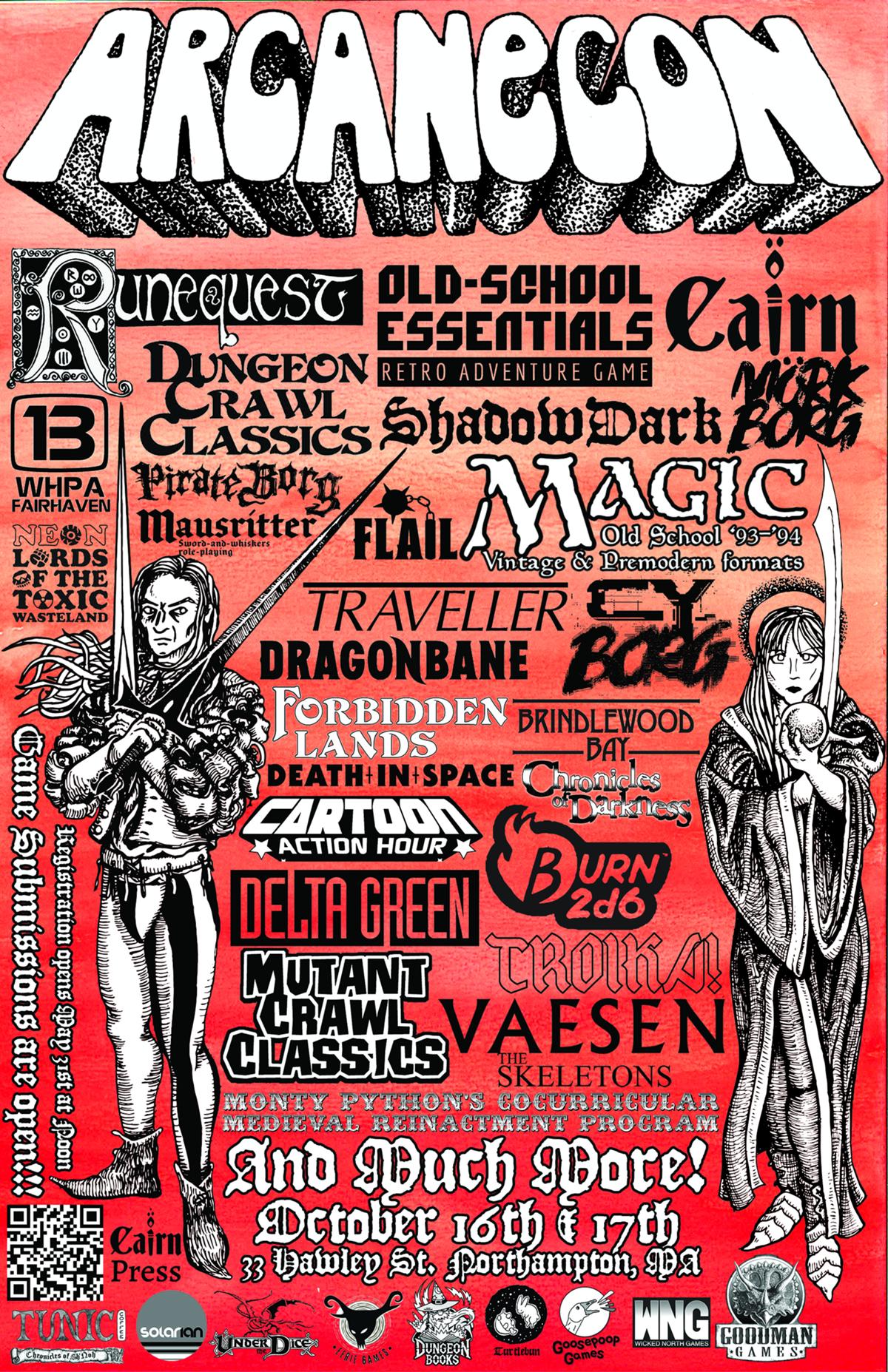
ArcaneCon is returning October 16th & 17th, 2026. Join us in a celebration of indie, old school, and old school-inspired RPGs, miniature games, board games, and more! ArcaneCon is Western Massachusetts’s premiere tabletop hobby convention! Game submissions are open now!!! See more information at Tabletop Events. |
|
| |
|---|
|
Keep on emailing us at hello@analogunion.com to let us know what you’d like to see more of/less of and to share ideas. If you enjoy the Analog Union newsletter, please tell your friends to sign up at AnalogUnion.com. Until next time! —JHM |
|
| |
|---|
|
|
|